


THE SOCAN MISSION
SYNTHESIZE
SCIENCE

The science of ocean and coastal acidification can be complicated and changing chemistry and its impacts vary by region. SOCAN focuses on the U.S. Southeast to understand how our coastal waters are changing and what this means for coastal resources.
COMMUNICATE WITH STAKEHOLDERS

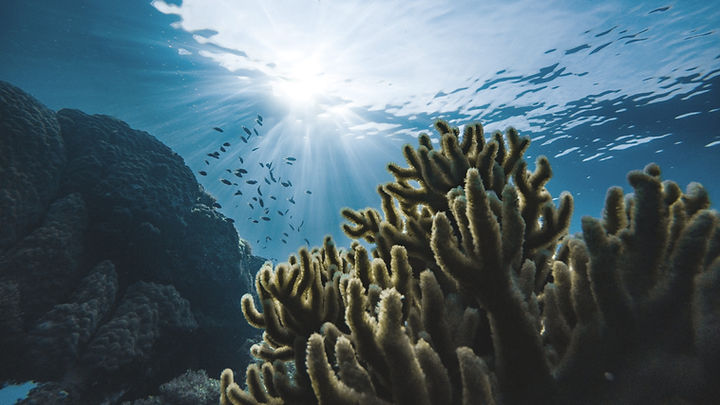
The U.S. Southeast has many coastal resources considered vulnerable to acidification, such as shellfish and coral reefs. SOCAN seeks to inform stakeholders about acidification and coordinate approaches to drive monitoring and research to address stakeholder needs.
COORDINATE
MONITORING EFFORTS

Current monitoring for acidification in the Southeast is limited but SOCAN has prioritized and is pursuing new locations to monitor coastal chemistry. We seek to leverage existing resources to expand acidification monitoring to answer questions about dynamic coastal conditions.

I want to receive SOCAN's monthly newsletters. Sign me up!
ANNOUNCEMENTS
Next Webinar: Building Capacity to Produce and Characterize Atlantic Seawater Inorganic Carbon Reference Material

Link to register: https://bit.ly/gcan-carbon
New Coastal and Ocean Acidification Publication!
SOCAN participated in a new publication with NOAA OAP and All CANs on establishing an ocean acidification monitoring network. This paper offers decision-making considerations for entities interested in establishing a local to regional scale OA observing system.
Wright-Fairbanks, E.K., Lord, N., Dugan, D., Goldsmith, K., Hall, E.R., Harper, A., Reimer, J.J., Siedlecki, S., Turner, E.J., Vreeland-Dawson, J. and Wakefield, K., 2025. Management considerations for establishing a coastal acidification monitoring system from US Coastal Acidification Networks. Environmental Monitoring and Assessment, 197(9), p.990.
Link to full article: https://link.springer.com/article/10.1007/s10661-025-14434-3